Information
Landmark: Sofia MetroCity: Sofia
Country: Bulgaria
Continent: Europe
Sofia Metro, Sofia, Bulgaria, Europe
The Sofia Metro is an underground rapid transit system serving the city of Sofia, Bulgaria. It provides transportation across the capital, connecting key districts and suburbs.
Visual Characteristics
The metro system features a mix of architectural styles across its stations. Older stations, particularly on Line 1, often incorporate functionalist design with concrete, steel, and limited decorative elements. Newer stations, especially on Lines 2, 3, and 4, utilize modern aesthetics with glass, polished stone (marble, granite), and integrated art installations. Station platforms are typically island or side configurations, with varying ceiling heights. Lighting is predominantly LED, providing bright, uniform illumination. Some stations, like Serdika, feature exposed archaeological remains integrated into their design.
Location & Access Logistics
The Sofia Metro network spans across the city, with four operational lines (M1, M2, M3, M4). The system connects the Sofia Airport (Terminal 2) via Line 4, the Central Railway Station and Central Bus Station via Line 2, and major residential areas with the city center. Access points are clearly marked with the metro logo. Parking is generally not available directly at metro stations, though some peripheral stations offer "Park & Ride" facilities. Public transport integration is high, with bus, tram, and trolleybus lines connecting to numerous metro stations. Single journey tickets, daily passes, and multi-day passes are available for purchase at ticket offices and automated machines within stations.
Historical & Ecological Origin
Construction of the Sofia Metro began in the late 1970s, with significant delays due to the complex geological conditions and the discovery of extensive archaeological layers beneath the city. The first section, connecting Slivnitsa and Konstantin Velichkov stations, opened on January 28, 1998. The system has since undergone multiple expansion phases. The primary purpose was to alleviate surface traffic congestion and provide rapid transit for Sofia's growing population.
Key Highlights & Activities
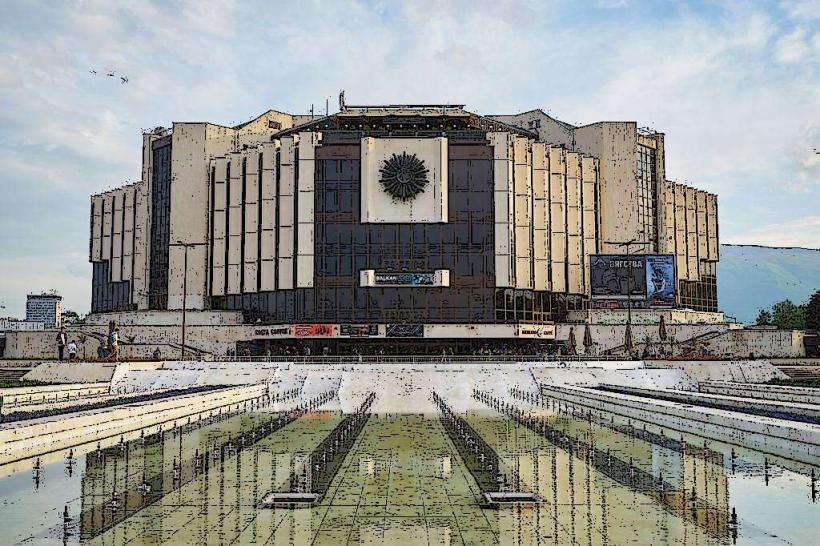
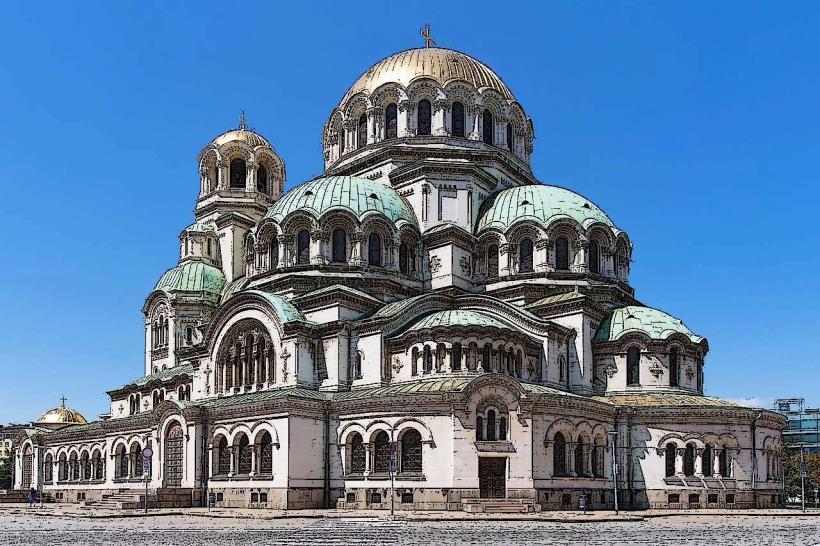
Utilizing the Sofia Metro allows for efficient travel to major city attractions, including the National Palace of Culture (via NDK station), the historical city center (via Serdika station), and the Alexander Nevsky Cathedral (via Sofia University "St. Kliment Ohridski" station). The metro provides a direct link to Sofia Airport Terminal 2. Observing the varied architectural styles and integrated art within different stations is a specific activity for visitors interested in urban design.
Infrastructure & Amenities
All Sofia Metro stations are equipped with ticket vending machines and staffed ticket offices. Restrooms are available at select larger stations, though not universally. Escalators and elevators provide access to platforms, ensuring accessibility for individuals with mobility impairments. Most stations offer 4G/5G cellular signal coverage. Free Wi-Fi is available in many stations and on some train sets. Small kiosks selling snacks, beverages, and newspapers are often located within station concourses.
Best Time to Visit
For general travel, the Sofia Metro operates from approximately 05:00 to 00:00 daily. To avoid peak crowding, it is advisable to travel outside of morning rush hour (07:30-09:30) and evening rush hour (17:00-19:00) on weekdays. Weekends and public holidays generally see lighter passenger volumes. There are no specific lighting or tide requirements for metro use.
Facts & Legends
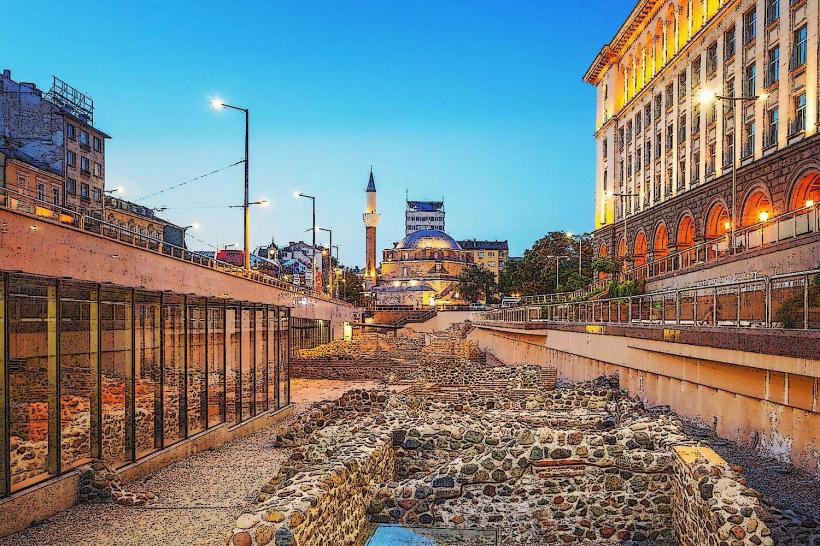
During the construction of the Serdika metro station, extensive Roman ruins of the ancient city of Serdica were unearthed. Instead of being removed, these archaeological findings were integrated into the station's design, allowing passengers to view ancient streets and buildings directly from the platforms and concourses. This makes Serdika one of the few metro stations globally that functions as an active archaeological site.
Nearby Landmarks
- Serdika Complex: 0km (directly integrated with Serdika station)
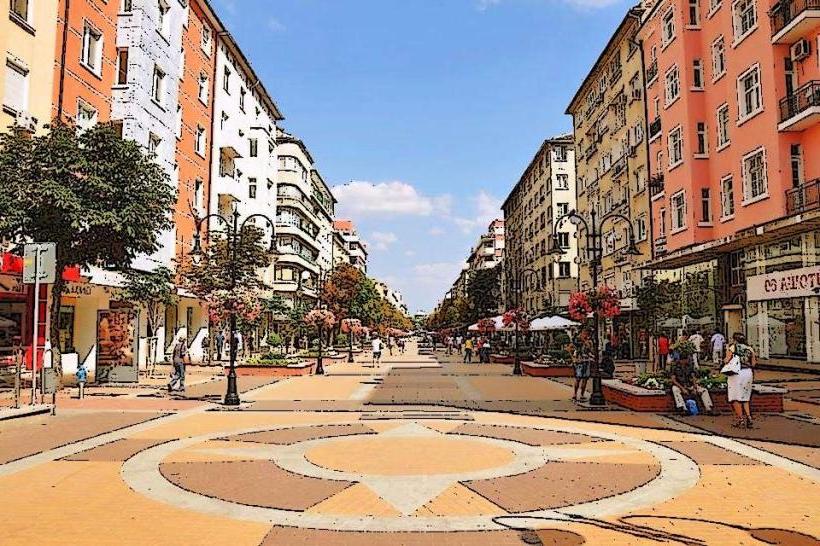
- Vitosha Boulevard: 0.5km South (accessible from Serdika or NDK stations)
- National Palace of Culture (NDK): 0km (directly integrated with NDK station)
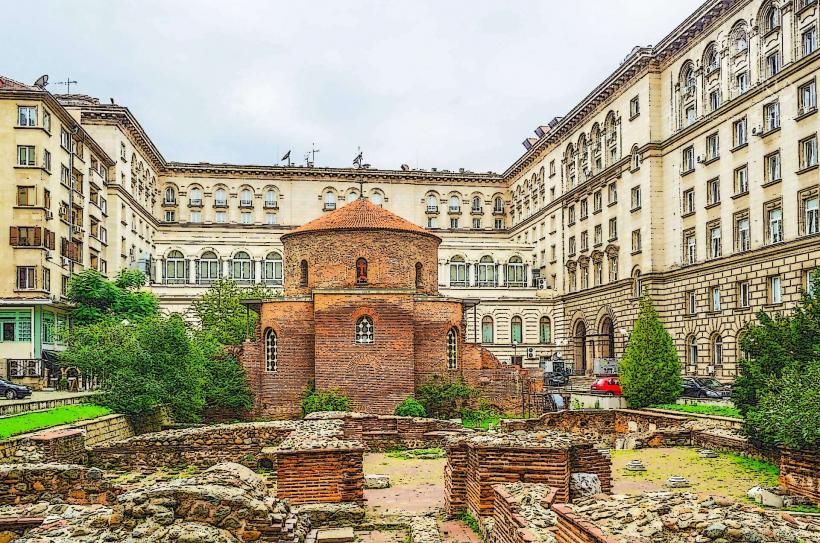
- Church of St. George Rotunda: 0.3km West (accessible from Serdika station)
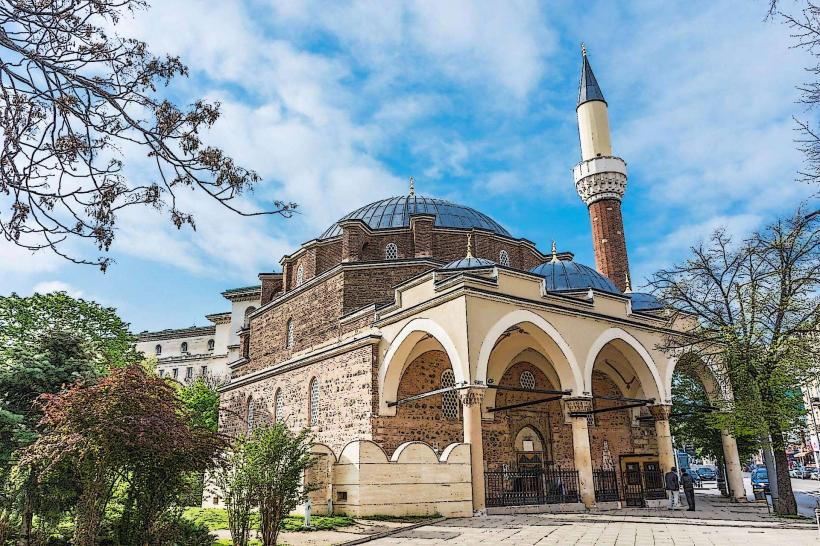
- Banya Bashi Mosque: 0.4km North (accessible from Serdika station)